
Central Bucks · Guide
Doylestown
Doylestown is the county seat of Bucks County, with a distinct borough core and surrounding township areas that share a name but not always the same municipal rules.
Read the Doylestown guideA practical Bucks County relocation guide: municipalities vs mailing addresses, school-district research, property taxes, transit and roads, environmental due diligence, and a first-week checklist—with official sources.
Bucks County is not one housing market or one set of local rules. It is a large Pennsylvania county of boroughs and townships, each with its own offices, ordinances, and service patterns. People relocating here often start with a familiar place name—Yardley, Levittown, Doylestown—and discover that the mailing label, the legal municipality, and the school district are three different research problems. This guide is a research framework: how to orient to the county, what to verify on official sites, and which questions to ask before you treat a listing address as a finished answer. It is educational process literacy, not legal, tax, flood-certification, or lending advice.
Bucks County sits north and northeast of Philadelphia along the Delaware River. Day-to-day life varies sharply by municipality: some areas center on compact borough streets; others are township corridors with different lot patterns, utility arrangements, and permit offices. Treating “Bucks County” as a single lifestyle or price band skips the parcel-level facts that actually shape ownership.
A practical move plan starts with jurisdiction, not vibes. Confirm the legal municipality on county or municipal records, then confirm school-district assignment through official district or Pennsylvania Department of Education materials, then confirm tax and assessment channels through Bucks County’s Board of Assessment resources. Tourism and destination sites can help you explore parks and main streets; they do not replace municipal codes, assessment tools, or school-boundary lookups.
Buyers and renters who relocate from outside the region often underestimate how quickly place names fragment into separate governments. A single search query can return a borough core, a surrounding township, a shared ZIP code, and a school district that only partially overlaps any of those lines. Build a habit of writing down municipality, district, and parcel identifiers for every serious address.
Use this page to build a shortlist of communities and a checklist of official sources. Community pages on this site deepen local architecture for specific places; county and state sites remain authoritative for current fees, forms, and maps. When something on a listing conflicts with a municipal or county record, treat the official record as the research priority and ask your transaction team to reconcile the difference in writing.
Locals often describe the county in three broad bands—Lower, Central, and Upper Bucks. Those labels are commonly used geographic shorthand for orientation. They are not zoning districts, school-district boundaries, or a formal county planning taxonomy that replaces municipality research.
Lower Bucks is generally the portion of the county closer to Philadelphia and the lower Delaware River corridor. Published community pages that commonly sit in this shorthand include Newtown, Yardley, Langhorne, Levittown, and Bristol. Each still needs its own municipal and school-district verification.
Central Bucks often refers to the county-seat area around Doylestown and neighboring communities such as Warrington and Richboro, plus river destinations such as New Hope. Again, the band is orientation only—borough versus township rules still control permits, taxes, and services.
Upper Bucks tends to be described as more rural in character. This guide does not invent inventory claims for that band; if you are researching Upper Bucks addresses, start with the correct township or borough website and Bucks County parcel tools rather than a regional nickname.
In Pennsylvania, the government that issues zoning decisions, many permits, and local ordinances is the municipality—typically a borough or a township. A postal city name on mail and listings is a delivery convenience. It does not automatically equal the legal municipality, the school district, or the tax collector for that parcel.
Boroughs are incorporated municipalities with their own governing bodies and websites. Townships are also municipalities with separate codes and staff. Two properties that share a familiar place name can sit in different governments a short drive apart. When you research a home, ask for the legal municipality on the parcel record, then bookmark that government’s site for trash, zoning, building permits, and local contacts.
School districts are yet another map. District boundaries can follow municipal lines in some places and cut across them in others. A shared school district does not erase differences in property taxes, zoning, or municipal services. Confirm district assignment through official district materials or Pennsylvania Department of Education resources for the specific address—not from a mailing label alone.
These patterns show up repeatedly in Bucks County place names. Use the community pages below for sourced local architecture; do not treat this section as a rewrite of those guides.
Yardley is a common example: Yardley Borough and Lower Makefield Township are separate municipalities that can share a Yardley mailing identity. Confirm which government applies before comparing taxes or permit rules.
Bristol presents a similar split: Bristol Borough and Bristol Township are distinct Lower Bucks governments. A Bristol mailing address does not tell you which office handles zoning or which school-district listing applies.
Langhorne searches often surface Langhorne Borough, Langhorne Manor Borough, and Middletown Township—related names, separate governments. Verify the parcel’s municipality rather than assuming “Langhorne” means the borough.
Levittown is a place identity and census-designated geography spanning multiple municipalities, not a single borough or township government. Parcel-level research is essential for taxes, schools, zoning, and permits.
Richboro is commonly associated with Northampton Township geography. Confirm the legal municipality and district assignment for any specific address rather than treating the place name as a complete civic identity.
Similar name-splitting patterns appear elsewhere in the county—Newtown Borough versus Newtown Township, Doylestown Borough versus Doylestown Township, New Hope Borough alongside Solebury Township. The lesson is structural: always separate marketing geography from legal geography before you compare taxes, permits, or services.
This site does not publish “best towns,” lifestyle rankings, or scored community lists. Fair Housing rules also mean location advice must not steer buyers toward or away from areas based on protected characteristics. What you can do is build a personal research framework and verify each factor with primary sources.
Start with constraints you can document: purchase budget including ownership costs, financing readiness, must-have property attributes, and any non-negotiable logistics such as access to specific employers, caregivers, or transit lines. Then shortlist municipalities—not just postal names—and compare them on verifiable axes.
Useful comparison questions include: Which municipality governs the parcel? Which school district serves the address if that matters to your household? How are water, sewer, and trash organized? What zoning and permit offices will you deal with for future work? Are there site-specific environmental questions such as flood mapping, well or septic service, or stormwater overlays? None of those questions has a county-wide answer.
Visit in person when you can, at different times of day, and treat listing photos as marketing—not as a substitute for inspection, disclosures, and municipal records. Drive the routes you would actually use for work, errands, and weekend trips on a weekday and a weekend if your schedule allows. Note construction, parking patterns, and how close daily services are to the specific street—not to a town name on a map pin.
When you are ready for local help navigating options, a conversation with a licensed agent can organize the shortlist without replacing your own official-source checks. Bring your constraints and the municipal names you have already verified; that keeps the conversation grounded in parcel reality instead of postal branding.
Published community guides on this site provide jurisdiction-aware starting points for individual places. They are designed to link you to municipal, school, transit, and park sources—not to rank towns against each other.
Browse the community directory for the full list, or open the Bucks County hub for regional orientation and related resources. The community cards on this page highlight published Bucks County guides so you can continue research without leaving the relocation path.
How you move through Bucks County depends on where you live, where you need to go, and which modes you actually use. This guide does not publish commute-time estimates; those change with destination, time of day, incidents, and weather. Verify current transit schedules and road conditions from the operators and agencies that maintain them.
SEPTA provides regional rail and bus service that serves portions of Bucks County and connects toward Philadelphia and other points on the network. Station names, parking, and schedules change—use SEPTA’s official materials for trip planning rather than third-party summaries.
PennDOT publishes statewide transportation information, construction notices, and driver’s services through Driver & Vehicle Services. For road context, people commonly reference corridors such as Interstate 95, the Pennsylvania Turnpike, U.S. Route 1, Route 611, and Route 202 when describing regional access. Those labels help with orientation; they are not claims about travel time from any specific address.
If transit access or highway proximity matters to your household, map the actual stations and interchanges relative to parcels you are considering, then confirm schedules and alerts on the day you need them.
Pennsylvania public schools are organized by school district. This site does not publish subjective school-quality rankings or “best district” lists. If schools matter to your move, research the district that serves a specific address through official district websites and Pennsylvania Department of Education resources.
Mailing city names are unreliable proxies for district assignment. Two homes with the same postal city can sit in different districts, and a shared district can still span multiple municipalities with different tax and zoning contexts. Ask for the district listed for the parcel, then confirm enrollment, transportation, and boundary rules with that district.
Private, charter, and specialized schooling options—if relevant to your household—should be researched through each school’s own materials and applicable state rules. Keep notes separately from public-district research so you do not conflate different systems.
Property taxes in Pennsylvania are assessed and collected through local systems. Bucks County’s Board of Assessment and related county pages are the starting points for parcel and assessment research. This guide does not publish county-wide millage rates, typical tax bills, or informal estimates—those figures are parcel-specific and change over time.
During a transaction, review assessment information, tax certifications, and settlement statements with your professionals. Online estimators and overheard neighborhood averages are not substitutes for official parcel data. Appeals and assessment processes have their own rules and calendars; use the Board of Assessment Appeals and Board of Assessment pages for current procedures.
For a deeper walkthrough of how Bucks County property-tax research fits into ownership planning, use the property tax guide on this site. Pair it with municipal and school-district context for the address you are evaluating.
Environmental questions in Bucks County are parcel-specific. River proximity, creek corridors, older stormwater systems, private wells, septic systems, and radon testing decisions do not apply uniformly across every address—even within the same municipality.
Flood research starts with FEMA’s official flood map tools for the specific structure and site, then municipal floodplain or stormwater rules for that parcel. Being outside a mapped high-risk zone does not mean zero flood concern; lenders and insurers may still ask for determinations. Educational content here is not a flood certification.
Water and sewer service vary. Some homes use public water and public sewer; others rely on private wells, septic systems, or mixed arrangements. Confirm service type for the property, then use appropriate inspections and municipal or authority contacts. Do not assume a neighboring house’s utility setup matches yours.
Radon is a naturally occurring gas that can enter homes from soil. Pennsylvania Department of Environmental Protection (DEP) publishes radon-in-the-home guidance. Testing decisions belong in your due-diligence plan with qualified professionals—not in a one-size-fits-all county rule.
Stormwater management, grading, and local ordinances can affect additions, driveways, and site work. Ask the correct municipality which rules apply before you plan renovations.
Bucks County includes older borough housing, mid-century planned communities, farmhouses, and newer construction. Age alone does not define condition—but older systems, past renovations, historic overlays, and heating history can change what you inspect and what municipal records you request.
Ask about open permits, certificates of occupancy or continued-use requirements, and any historic-district rules that apply to the specific property. Match specialty inspections to what is actually present: roof and structure age, electrical and plumbing updates, HVAC type, chimney, sewer lateral or septic, well water, and—when oil heat history exists—tank location and environmental follow-up questions.
These topics are property-specific. Use the inspection and older-home checklist resources on this site for process literacy, then hire qualified inspectors and confirm municipal requirements with the office that serves the parcel.
Administrative tasks after you choose a home are mostly official-process work. Use primary agency sites and the municipality that serves your parcel—not affiliate roundups—for current forms and timelines.
New Pennsylvania residents should review Driver & Vehicle Services requirements for licenses and vehicle registration on the official DMV site. USPS change-of-address tools handle mail forwarding; update banks, insurers, employers, and subscriptions separately.
Voter registration follows Pennsylvania election rules for your new address—confirm through official state or county election resources. School enrollment, if applicable, goes through the district that serves your address, with documents that district lists.
Utilities are not one county-wide package. Electric, gas, water, sewer, trash, recycling, and broadband providers or municipal programs vary by location. Ask the municipality and your settlement team which accounts to open and which authorities serve the parcel. Trash and recycling schedules are typically municipal or contracted locally—bookmark the correct calendar before move-in week.
If you are transferring medical care, pharmacy accounts, or pet records, schedule those updates in the same window as address changes so you are not hunting for providers on day one. Keep closing documents, inspection reports, and warranty paperwork together; those files matter for insurance claims, future repairs, and eventual resale.
The first week after move-in is for safety, access, and confirming that services match the address you closed on. Keep it short and actionable.
Useful alongside a relocation plan — with disclosed assumptions.
Estimate principal and interest with an adjustable rate, down payment, and loan term.
OpenEstimate a purchase range from income, debts, down payment, rate, taxes, insurance, and HOA.
OpenBallpark buyer cash beyond the down payment using editable fee and prepaid categories.
OpenEstimate how much you may receive after mortgage payoff, seller costs, credits, and other expenses.
OpenAsk about your property and possible next steps — not an automated appraisal.
OpenNo. Housing stock, municipalities, school districts, utilities, and tax contexts vary across the county. Research the legal municipality and parcel facts for each address rather than treating a county-wide average as guidance.
Not reliably. Postal city names can span multiple boroughs or townships. Confirm the legal municipality on county parcel or municipal records—examples include Yardley Borough vs. Lower Makefield Township, or Bristol Borough vs. Bristol Township.
Identify the district assigned to the specific address through official district materials or the Pennsylvania Department of Education, then confirm enrollment rules with that district. This site does not publish school rankings. A mailing address alone is not enough.
Use Bucks County Board of Assessment resources and documents provided in a transaction. Avoid informal online estimates for financial decisions. See also the Bucks County property tax guide on this site for process context.
Flood exposure is parcel-specific. Use FEMA’s Flood Map Service Center for the address, then ask the correct municipality about floodplain or stormwater rules. River proximity does not mean every nearby property has the same designation.
No. Some properties use private wells, septic systems, or mixed arrangements. Confirm service type for the parcel and plan inspections accordingly. See the well and septic guides linked from this page.
Radon testing is a common due-diligence topic in Pennsylvania, guided by PA DEP and EPA educational materials. Whether and how you test on a given transaction depends on your Agreement of Sale, advisors, and property-specific plan—not a universal mandate stated on this page.
Review current requirements on PennDOT Driver & Vehicle Services (dmv.pa.gov). Timelines and document lists change; use the official site rather than third-party summaries.
Providers and municipal programs vary by location. Confirm electric, gas, water, sewer, trash, recycling, and broadband through the municipality or authorities that serve your parcel, and with your settlement team before move-in.
Start with the community directory and the Bucks County hub, or use the published community guides linked in this relocation guide (including Doylestown, Newtown, New Hope, Yardley, Langhorne, Warrington, Levittown, Bristol, and Richboro).
Primary government and agency links used for this guide. Confirm current details on the source sites.
Start a shortlist while you read the guide.
Doylestown is the county seat of Bucks County, with a distinct borough core and surrounding township areas that share a name but not always the same municipal rules.
Read the Doylestown guide“Newtown” usually points to two separate Bucks County municipalities — Newtown Borough and Newtown Township — that share a name, a school district, and everyday cross-border geography.
Read the Newtown guideYardley Borough is a compact Bucks County river borough surrounded by Lower Makefield Township — two governments that often share a Yardley mailing address but not the same municipal rules.
Read the Yardley guide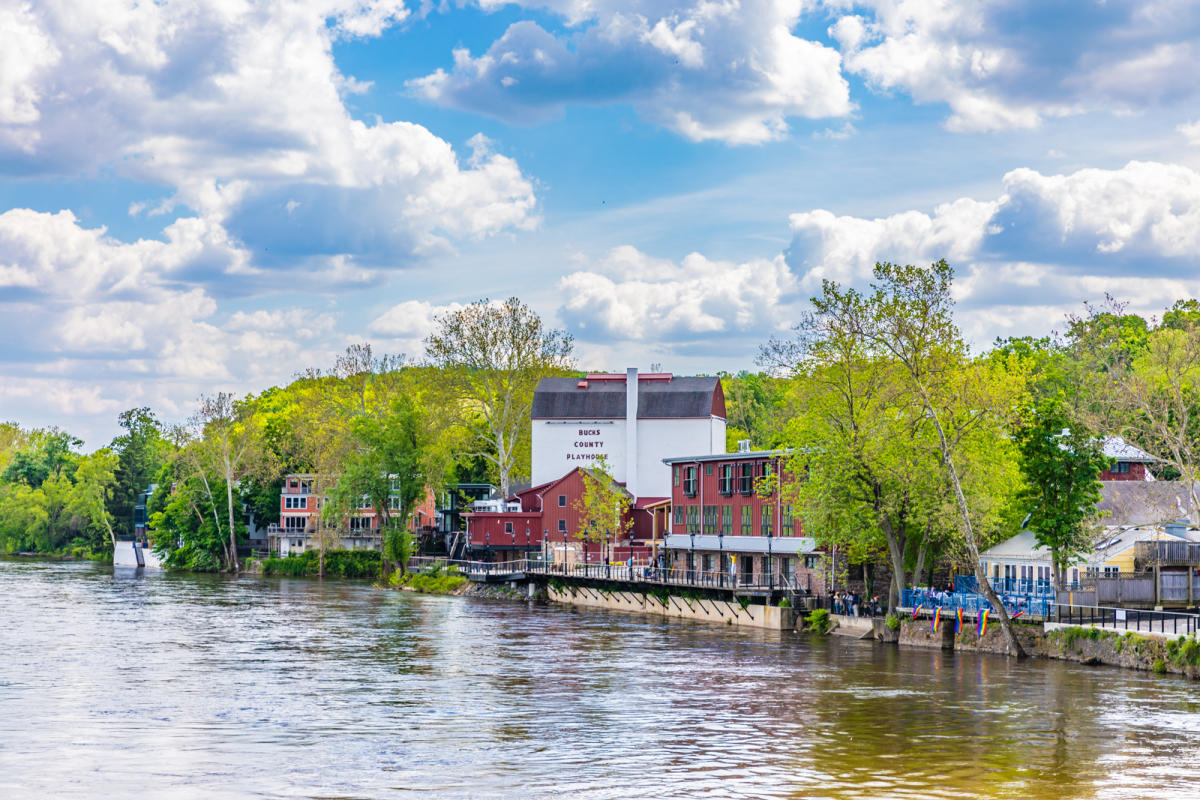
New Hope Borough sits along the Delaware River in Bucks County, with its own zoning and parks — and a neighboring Solebury Township that shares a school district but not the same municipal government.
Read the New Hope guide“Langhorne” can mean Langhorne Borough, nearby Langhorne Manor Borough, surrounding Middletown Township, or a shared 19047 mailing identity — separate governments that require parcel-level research.
Read the Langhorne guideLevittown is a place identity and census-designated place spanning multiple Bucks County municipalities — not a single borough or township — so parcel-level research is essential for taxes, schools, zoning, and permits.
Read the Levittown guideBensalem Township is a single Lower Bucks municipality with its own zoning, permits, parks, and school district — postal labels can still vary by facility or mailing address, so confirm the parcel before comparing rules.
Read the Bensalem guide“Bristol” can mean Bristol Borough or Bristol Township — two separate Lower Bucks governments that often share a 19007 postal identity but not the same municipal rules, school districts, or permit offices.
Read the Bristol guideWarrington Township is a Central Bucks municipality with its own zoning, parks, and permit processes — and a postal identity that still requires parcel-level confirmation for taxes and schools.
Read the Warrington guideRichboro is an unincorporated community within Northampton Township in Central Bucks — not a separate borough — so township zoning, permits, parks, and Council Rock School District resources are the practical starting points.
Read the Richboro guideRelocation questions are welcome — towns, commuting, timing, and where to begin. No pressure to be “ready.”